Saturday, November 2, 2013

Pincushion me!

The three letters that convinced me to try PRP. 
On the right is my MRI.  On the left top is my Boston acceptance. 
On the lower left is a totally unexpected check from
the bank that held the mortgage on my recently sold home.
I've been fighting multiple injuries over the last few months, including a) a combination of tendonitis/plantar fasciitis/ligament issues on my right foot, and b) a low grade tear in my left hamstring tendon at the attachment.  Yesterday, I had my first treatment with PRP to address these issues.

PRP stands for Platelet Rich Plasma.  You extract normal blood from someone, process it in a centrifuge to concentrate the platelets, then reinject it at injury sites.  The theory behind it is that the increased platelet concentration stimulates a healing process that is faster and/or more complete than what your body is doing on its own.  It's been used all in sort of locations (joints, muscles, tendons) with the greatest effectiveness noted in cases of tendonosis and/or ligament damage.

At least that's the theory.  In humans, there's just not that much evidence, especially from large scale studies.  Just lots of anecdotal experience.  And as for how it works?  Well, no one's quite sure about that either.

I wasn't too worried about not knowing how it works - that holds for lots of proven treatments, including aspirin.  I was more concerned about the lack of large scale studies that supported its use.  However, the lack of evidence may be linked in part to the lack of standardization for the PRP process.  Not all PRP is the same - there's a wide variance in a) platelet concentration, b) what else is taken out of the blood (red blood cells?  white blood cells?), and c) the recovery process.

Of course, that begs the question: how do you know you're getting the best process?  Every practitioner will tell you that their process is superior to others, and there's not much research comparing the different methods.  In the end, I decided to take comfort that I was going to a doctor that effectively used PRP to treat my same injury in another athlete.

***

PRP usually involves a single appointment per injection - you show up and have your blood drawn.  Then you wait about 15 minutes while they process it in their centrifuge, and then get the injection.  Whole thing should take an hour or less.

In my case, we decided to do it a bit differently, for a few reasons.  For one thing, I'm a very difficult blood draw - I have Raynauds, low blood pressure, a low resting heart rate, and veins that are deep, narrow, move around, and collapse.  It made sense in my case to schedule a blood draw the day before, to ensure that we had plenty of time to get what we needed, and also so that I could come back the next day if we couldn't get enough.

Doctor Wagner also wanted to be absolutely sure that he was treating the correct area for the hamstring.  So he proposed that I set up a diagnostic appointment where I'd run some, then get a shot of lidocaine (short duration local anesthetic) in my tendon, and then run some more, keeping track of how I felt on each run.  Then I'd report back to him when I came back in for the PRP.

So, we scheduled three appointments:
  • Thursday at noon: get blood drawn
  • Friday morning - run for about 20-25 minutes, get a shot in butt at 6:45 am, run some more.
  • Friday afternoon - PRP.
And then, of course, rest for the weekend.

***

The blood draw on Thursday went as I expected, of course.   Poorly.

I went in right at noon; an hour and seven sticks later, we had about 3/4ths of the blood needed.
The residue from
Thursday's bloodless draw
At this point I was told I had my choice of a) going with a mix of PRP and prolotherapy or b) coming back at 6:00 am on Friday morning to take a second try at the blood draw.  I chose the second.  Dr. Wagner had recommended PRP rather than prolotherapy - I was going to get PRP.

Fortunately, when I returned at 6 the next morning, the blood was flowing more freely (it was ridiculously warm outside, which I think helped).  With two more sticks (9 sticks total so far), we had enough blood, and I was dismissed to go run laps of the office park in the dark.

Laps done, I returned for two ultrasound-guided shots into my hamstring (we're up to 11 jabs), and then did some more running before returning home to work for the morning.  The hamstring was improved, though still weak and tight.  That same afternoon, I returned for the grand finale.

***

During my previous visits to this doctor, I had filled out normal forms - insurance information, HIPAA disclosures, diagram of where I hurt, etc.  But now I had new ones to fill out - they basically fell into two categories - those that said VERY CLEARLY that this was an experimental procedure and not part of the standard process of care, and those that said EVEN MORE CLEARLY that insurance would not cover this procedure and that I was responsible for the cost in full.  Then they collected my payment before I went back.

The magic cart.
When I returned to the examination room, I was greeted by the physician assistant and a cart with syringes.  She showed me the bag that my syringes had been provided in, to demonstrate that it was my name on the bag,  and  then I got up on the table.

Dr. Wagner walked in, and after some pleasantries and an update on my morning run, he pulled the cart over.

"My apologies in advance.  I'm afraid this is going to hurt."

I've heard that before from doctors, and usually dismiss it.  The normal population's pain tolerance isn't the same as a runner's, and many times I've gotten this warning and the procedure itself has been nothing.  But something about his tone (and knowing that he had done PRP on a lot of athletes) told me this was different.

Oh well.  Needed to be done.

And so we began.  And yes, it wasn't pleasant.  For each place I got injected (the ligaments on the outside of my right ankle, my right plantar fascia, and my left hamstring at the insertion onto the pelvis) he first applied two-three shots of an activator.  Then the PRP itself as 2-3 ultrasound-guided injections in the area - it wasn't the shot itself that hurt as much as the extended injection of the fluid, which made each location feel like it was "too full."

[I lost count of injections at this point.  I'm pretty sure I ended up with 6 injections of PRP - 4 in the foot and 2 in the hamstring tendon.  Plus multiple activator shots.  Combine these with the preceding 11 jabs, and I'm gonna put myself at 20-25 needle pokes over a bit more than 24 hours.  It's a truly wonderful thing that I'm not trypanophobic]

Since people are always curious as to just how much it hurt, I'll express it this way.  In terms of pain ranking, I've had the following at various points: deep tissue massage, cross-frictional massage, dry needling, Graston technique, ART, cortisone shot, nerve conduction study.  I've also raced both mile races and a marathon, and have broken bones.
I want to be here.  I'm not.
I'd rank the PRP above most of these.  It definitely hurt more than a cortisone shot, ART, Graston, or dry needling (or marathons and mile races).  I'd rank it slightly less painful than cross-frictional massage on an inflamed tendon.  It's probably about equivalent to a masseuse's use of his elbow on a really deep muscle knot, but imagine that the pain continues on, and even increases, after he's done. 

So yeah. not pleasant.  But it hurt less than missing the Sunday long run.

***

Then I was done, and Brian carted me home, where I've been ever since.  Tips for others that get PRP, based on my experience:
My foot apres-PRP. 
No, I didn't take any ass shots.

1) Don't plan on driving yourself home afterwards, even if you're not getting work done on your right foot.  You'll be pretty sore.  Sore enough to distract you from concentrating on the road.

2) It's a pretty good idea to plan on being home (and couch) bound for a day or two. You'll be sore, and you're also supposed to be resting.  Don't plan on going back to work the same day.  Don't plan on coming home and catching up on your housecleaning or laundry.  I stocked up before hand on groceries, reading materials, and plans for internet use, and I'm glad I did.

3) I do wish I had brought Tylenol with me to the appointment, so I could have taken it right away.  I won't make that mistake again.

As for the recovery?  It seems that everyone that gets PRP gets different advice here, which I think ties back to the fact that there is no set standard for how to manage it.  In my case, in addition to the standard advice to avoid NSAIDS for at least a week, I was told 24-48 hours of just rest.  After that, I can return to activity by starting off with swimming with a pull buoy.  After that, I can shift to swimming, then to weightbearing activity and rehab exercises, and then to running, letting discomfort be my guide. 

Dr. Wagner explained that there were two reactions that occurred from the PRP.  The first is an immune reaction that causes the pain and swelling.  That's at its worst for the first several hours before trailing off - the total duration of this reaction is about 7-10 days.

Separately, there's a stimulus to the body's healing process.  That is no by means instant - it starts slowly and ramps up gradually over time (and time is weeks and months).  PRP is NOT an instant fix or a way to get back to running workouts within the next week.  It IS a way to hopefully shorten the healing time for tendons and ligaments substantially, increasing my chances of starting a marathon training cycle after the new year.

Whether it works for me?  We'll see.  In the meantime I'll be parked on the couch on my side, watching streaming horse show and the NYC marathon.

Monday, October 28, 2013

Training log - week ending 10/27/13

This week was 7 miles of “real running” and 12,000 yards of swimming  -- training log is here.  

I'm getting better at swimming, so yay.  I'm not fast, or even average, but sometimes I get dirty looks from the old ladies in the slow lane, and have to relocate to "medium".  I can successfully execute a flip turn (success has many definitions - here it means that I don't end up in the next lane over and don't hit my head...) and I can do freestyle for an hour pretty comfortably.

I'm not a real swimmer yet, and may never be.  For one thing I do stuff like log 3500 meters in Wilson as 3500 yards, though I understand that's not quite the case.  I'm also the slowest kick boarder ever, and I don't DARE try backstroke or (*shivver*) butterfly.  But I've got something aerobic I can do, and I'm getting better at it.

As far as injuries go, I went for a consult with a doctor specializing in "physical medicine and rehabilitation."  His work is mainly prolotherapy, PRP (platelet rich plasma) therapy, and other related stuff.  After reviewing my MRI reports, my history, and doing a physical exam, he stated "your report has PRP written all over it."

I was and am slightly cynical.  On the one hand, this guy's an expert in PRP and that type of stuff.  On the other hand, when you have a hammer, every problem looks like a nail.  There was a small part of me that wondered if he saw anyone that didn't have PRP written all over them.  And I'd like to see some more favorable solid scientific studies in favor of PRP - there's not that much conclusive research in people.

PRP is not covered by insurance and is not cheap (though it is cheaper than equine vet bills).  That's another factor.

[the procedure I'm getting will run me about $1200, if you were curious]

[high hamstring tendon issues can also linger for years.  If you were curious]

[I'd really like to be able to train for Boston in the spring.  Dunno if you were curious about that]

I've discussed with two people who had PRP done, and both said they'd do it again without question, and it was worth the cost.  One of these people got it from the same doctor I'm going to, for the same condition (high hamstring tendon).  I also ran it past several PT friends and my coach, all of whom thought it was worth a shot (teehee).  So, I'm going to go for it.

I'll be getting stabbed all over the place.   The process involves drawing blood, spinning it down to concentrate the platelets, and then injecting it where you need healing to occur.  Since the main cost is from the blood drawing and spinning, not the injections, it makes sense to get shots everywhere you think they'll help - more bang for your buck.  So I'll be getting them in my left hamstring at the origin (butt), all over my right foot (plantar, peroneal, and some loose ligaments), and possibly my back, depending on the conclusion from some diagnostics.  I think I'm also going to ask if I can get a shot in my right groin - since we're going to all this trouble, I might as well take a stab (teehee) at that old issue too.

Then I go home and lay on the couch for the weekend - fortunately, this is a good weekend to do so - I'll stream the NYC marathon on one computer and the Maclay finals on the other on Sunday.

After that, I'll swim with a pull buoy for a while - anywhere from a few days up to 2 weeks.  Supposedly the PRP will make things worse in the short run, but I should start seeing improvement in about 3 weeks.

We shall see.  I'm scheduled for this Friday, with a blog report to follow.  Since I'm becoming a large size voo-doo doll, I'm opening myself up for dedications.  Just let me know whose name you want written on my foot, butt, etc, and it shall be done.


Dailies

Monday:  
In the morning, injury prevention work and upper body weights.  Foam rolling at night.

Tuesday: 
In the morning, injury prevention work, lower body weights and then 2750 yards of swimming.  PT appointment mid day.  Foam rolling at night.

Wednesday
:   In the morning, injury prevention work and 3000 yards of swimming.  Sports massage at night.

Thursday:  
In the morning, injury prevention work and 2750 yards of swimming.  Foam rolling at night.

Friday: 
In the morning, injury prevention work and jogged 2 miles easy (per PT's orders).    Foam rolling at night.

Saturday:  
In the morning, upper body weights and injury prevention work, followed by 3500 yards of swimming.  

Sunday:  
Spent the morning cheering at Marine Corps Marathon.  Later, I did lower body weights and injury prevention work, plus 5 miles running easy, per PT's orders.  Also did some foam rolling.

Tuesday, October 22, 2013

Training log - week ending 10/20/13

This week was 12 miles of “real running” and 12,000 yards of swimming  -- training log is here.  

And...another setback.  My left hammy/butt was no longer feeling like sciatica (for one thing, my left foot wasn't cramping), but was still hurting, so I went back to my orthopedist to request an MRI.  Got it on Friday and....

"There is edema within the left hamstring tendon origin with trace fluid signal intensity
at the attachment to the ischial tuberosity. There is also mild adjacent soft tissue edema.
Findings are compatible with a low­grade partial tear."

Oops.

Brian made sure I was aware that
my pelvis was "grossly unremarkable."
Well, there goes my self-esteem....
[there was also some mention of problems with my right groin - an osteitis pubis/adductor issue.  That's old news. My right groin and I reached a truce about 2 years ago.  I promised to avoid running fast downhill for extended periods of time, especially on the Capital Crescent; in exchange it would stop complaining.  And we've both kept to that promise.]


Despite the ominous word "tear", there's a lot of evidence that this isn't that bad, and was caught early.  It's always good to see words like "minimal," "mild," and "low grade."  Plus according to the report the tear itself wasn't visible on the MRI, it's just a conclusion based on what the surrounding tissue is like.

But, my plan of action is pretty clear.  I was never going to run a spectacular Richmond half marathon anyway, given that it's a month away, and I'm not really in great shape.  So better to shut things down completely, practice swimming for a bit while rehabbing.  And working on total body strength and functional fitness so that when I'm ready to go, I'm REALLY ready to go. 

It's not giving up.  It's moving forward.

In the meantime, I've got plenty of stuff the next few weeks to occupy myself.  Between Halloween festivities, watching indoors fanatically, cheering for friends at their fall marathons, and rock concerts, I'll be busy.  Oh, and work.  And rehab - my PT said he was OK with a week or so not swimming, but then wants me to start up with gentle jogging again.

Hard to call it a bad week when I got to see Trent et al
for the 12th, 13th, or 14th time (I've lost count). 
You haven't lived until you've seen "March of the Pigs" performed live.


Dailies

Monday:  
In the morning, injury prevention work.  Foam rolling at night.

Tuesday: 
In the morning, injury prevention work and then 2500 yards of swimming.  Foam rolling at night.

Wednesday
:   In the morning, upper body strength work, yoga, and 3000 yards of swimming.  Foam rolling at night.

Thursday:  
In the morning, 7.5 miles easy,  followed by 1000 yards of swimming.  Foam rolling at night.

Friday: 
In the morning, 4.5 miles very easy, and then an MRI.    NIN at night.

Saturday:  
In the morning, upper body weights and injury prevention work, followed by 3000 yards of swimming.  Foam rolling in the afternoon.

Sunday:  
In the morning (after cheering at Army 10 miler) lower body weights and injury prevention work, and then 2500 yards of swimming.  Restorative yoga and foam rolling at night.

Tuesday, October 15, 2013

Training log - Week ending 10/13/13

This week was 50 miles of “real running” and 5000 yards of swimming  -- training log is here.  

[belated and very quick entry - I've been way busy]

Still ramping up the miles.  My fitness feels like it's actually not too bad, though not great.  Cross training does work.

Of course, no uptick is without its set backs, and my hammie decided to get unhappy with me at the end of last week.  Not horrible (I can't feel it when I'm walking at all), but I'm going to take three days off to be careful.  


Dailies

Monday:  
In the morning, upper body strengthwork and injury prevention work, followed by yoga and then 1500 yards of swimming.  Foam rolling at night.

Tuesday: 
In the morning, 9 miles, including 4x800 on a trail (splits were 3:03, 3:06 (traffic), 2:58, 2:55).  Foam rolling at night.

Wednesday
:   In the morning, 8 miles easy (8:11), followed by yoga.  Later did another 3 miles easy (7:56 pace).  Massage at night.

Thursday:  
In the morning, some upper body weights and then a yoga class, followed by 2000 yards of swimming.  Foam rolling at night.

Friday: 
In the morning, 11.5 miles.  Skipped my normal tempo due to bad conditions on the trail, instead just doing a progression for the last few miles, dropping down to 6:30 pace for the last half mile.   Foam rolling at night.

Saturday:  
In the morning, 3 miles easy (8:00 pace), and then 1500 yards of swimming, followed by injury prevention work.  Yoga and foam rolling in the afternoon.

Sunday:  
In the morning, 15.5 miles easy (8:08 pace).  Some foam rolling at night.  Also spent 8 hours watching the US Equestrian medal finals.  Stuff like THIS is really hard.  Trust me.

Monday, October 7, 2013

Training log - Week ending 10/6/13

This week was 42 miles of “real running” and 8500 yards of swimming (and a lotta stepmilling) -- training log is here.  

Still ramping back up.  I carefully tested my foot on a track workout this week - doing 4x1200, but keeping the pace very controlled.   Speed was OK, but the repeated turning wasn't - so I'm continuing to do faster running, but keeping it to the trails.  Which is sad - I miss my teammates.  But heck, solo workouts on the trails are better than solo workouts on the stepmill or in the pool.

Of course, with the government shutdown hitting DC pretty hard, I'm arguably breaking the law by running on the trails....oh well.

This was also my first week of trying to do yoga as much as reasonably feasible, to keep my chassis strong, so to speak.  I'm alternating between two studios - the first, Down Dog, offers what is essentially a boot camp/yoga hybrid.  It's about 60-90 minutes of a fast paced series of yoga poses.  It's great for me, in that the sequence (which really doesn't vary much between classes) covers everything I need to hit - bridges, lunges, side planks, one legged balance poses. 

However, the Down Dog classes are also a bit intense, and don't really work as a recovery workout.  So I'm balancing them out with more traditional yoga classes at Tranquil Space.  Tranquil Space offers a wide variety of classes - if I stick with the level 1 classes and the open flow, I get a good stretch and strengthening session without being exhausted afterwards (the Tranquil Space level 2 classes are a different story...)


Dailies

Monday:  
In the morning, upper body strengthwork and injury prevention work, followed by yoga and then 2000 yards of swimming.  Foam rolling at night.

Tuesday: 
In the morning, 7 miles, including 4x1200 at somewhere between tempo and marathon pace to test my foot on the track, and then a stepmill workout of 8x2:00 hard, 1:00 recovery.  Foam rolling at night.

Wednesday
:   In the morning, 8 miles easy (8:20), followed by yoga and then 2500 yards of swimming.  Foam rolling at night.

Thursday:  
In the morning, some upper body weights and then a yoga class, followed by 1500 yards of swimming.  Foam rolling at night.

Friday: 
In the morning, 11.5 miles, including a tempo workout of 2x2 miles, split as 13:41 (6:54/6:47) and 13:20 (6:43/6:37).   Yoga and foam rolling at night.

Saturday:  
In the morning, upper bodyweights, 45 minutes on the stepmill, and then 2500 yards of swimming.  Yoga and foam rolling in the afternoon.

Sunday:  
In the morning, 15.5 miles as a progression run (first 6.5 in 8:39, next 4 in 8:02, last 5 in 7:22 - multiple long water breaks in here, though), followed by a yoga class.  Some foam rolling at night.

Monday, September 30, 2013

Training log - Week ending 9/29/13

This week was 37 miles of “real running” plus 6 “miles” pool running, and 9000 yards of swimming (and a lotta stepmilling) -- training log is here.  

Another week and we're still progressing.  The sciatica's pretty much gone.  And the plantar is progressing nicely, enabling me to ramp up the running again.  It's not gone yet, but it's following that familiar path of improvement.  Fingers crossed. 

Plantar Fasciitis, like any tendonitis, is a bitch to deal with.  While stress fractures and broken bones have a clear time line and protocol for how to handle, connective tissue injuries can be really individual.  They can be gone in a week, or linger for months to years.  What works for one person screws up another.  And so you get the conflicting advice.  One doctor tells you to take Ibuprofen, the other tells you not to.  One person swears by orthotics, the next by going barefoot.  Some say you should run, while others say you should rest.

After giving it way too much thought, here's my hypothesis.  (And no, I have absolutely no medical/health training.  But this is my blog, so I'm allowed to waste pixels on stuff like this).

There's a lot of discussion about the role of inflammation in healing.  It's an oversimplification, but inflammation is how you heal - it's the body sending resources to the site of the injury to repair.  However, too much inflammation can be a bad thing - if the inflammatory process is a crew of construction vehicles going to a work site, then too much inflammation is gridlock.  Plus, the swelling that results from inflammation can itself irritate tissue, and perpetuate inflammation.

But, on the other hand, if you have NO inflammation, then you don't heal.  Tendonosis, not tendonitis.

So, it seems to me that healing a soft tissue injury is about hitting the optimal level of inflammation.  Not too little, not too much.

And different people are....different, with differing levels of inflammatory response.  One person might have a very strong inflammatory response, and need to beat it down with NSAIDs, ice, and rest.  Those are probably the people that can take Aleve and rest for a few days, and then be ready to go (hate them).  Another might have a weak response, and need to kick start it with stuff like dry needling and exercise.

Or maybe you're in the middle or have some mix of the two.   That's where I think I am.  If I just rest, absolutely nothing happens.  If I work it gently, then I get a bit of inflammation, which promotes the healing.  Of course, if I overdo it, then I inflame it too much, or damage the tissue, and set myself back.  For myself, it's all about hitting the proper balance.  When a tendonitis issue is in its initial stage and really inflamed, then I need to stay off of it, and maybe pop some Aleve.  But as soon as I'm over that first hump, I need to be provoking it, carefully, to heal.  Two weeks of gentle runs (starting at a mile or so, and building) is a lot more effective than two weeks off (I've tried both).


And yes, if you're curious, here what does and doesn't work for me for plantar fasciitis.  NOTE: this is for me, not for anyone else.  Everyone really needs to figure out what works for them.

Works:
massage foot with golf ball, ART, dry-needling, heating pad (after initial flare has passed), strassburg sock, walking around barefoot (after initial flare has passed), gentle running in low drop shoes, foot strengthening, eccentric heel drops, stretching calves.  Also NSAIDs, but only during initial flare.

Doesn't work:
full rest (after initial flare), ice foot bath, iontophoresis, orthotics, heel pads, very cushioned shoes.


Dailies

Monday:  
In the morning, 50 minutes of pool-running for "5 miles", followed by upper body strengthwork and injury prevention work.  Foam rolling at night.

Tuesday: 
In the morning, 8 miles easy (8:25), and then a stepmill workout of 8x2:00 hard, 1:00 recovery, followed by 1500 yards of swimming.  Foam rolling at night.

Wednesday
:   In the morning, 7 miles very easy (8:42), followed by yoga and then 2500 yards of swimming.  Massage at night.

Thursday:  
In the morning, some upper body weights and then a yoga class, followed by 1500 yards of swimming.  Foam rolling at night.

Friday: 
In the morning, 10 miles, mostly easy, but with a mile at 7:12 pace to test things out, followed by a stepmill workout of 6x2:00 hard, 1:00 recovery.  Foam rolling at night.

Saturday:  
In the morning, a pretty tough yoga class followed by 2500 yards of swimming.    Upper body weights and foam rolling in the afternoon.

Sunday:  
In the morning, 12 miles as a progression run (8:33 for first 3.5 miles, 7:43 for next 5.5, 7:03 for next 2, and then jogged a half mile cooldown to get me to 12), followed by a stepmill workout of 6x2:00 hard, 1:00 recovery and then 1500 yards of swimming.   In the afternoon, took a yoga class.  Some foam rolling at night.

Monday, September 23, 2013

Training log - Week ending 9/22/13

This week was 28.5 miles of “real running” plus 20 “miles” pool running, and 6500 yards of swimming -- training log is here.  

The rehab/return continues. I'm making progress, though not as fast as I would like (to be fair, I NEVER progress as fast as I like :)).  The foot continues to improve, and the sciatica is much improved (more yoga and real running/less pool-running is doing the trick).

Since I've cut back on the pool-running, I was missing an outlet for hard intervals (biking and rowing were tweaking my sciatica, and my foot didn't like the arc-trainer).  But never fear - I've found something new - the step mill.  

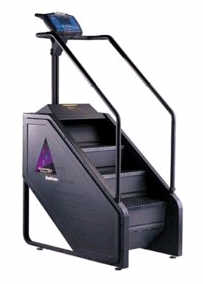
It's the holy grail of cross training - doesn't seem to aggravate anything, and kicks my rear.  I had originally thought I'd do 8-10 reps of 3 minutes hard on it, to match track workouts.  Nope - I learned my lesson quickly.  Going "hard" on this is basically like a hill workout.  4 intervals of 2 minutes each is very hard; 6 intervals of 2 minutes each has me doubled over at the end.

It's awesome (I think).  And feels like it should translate over very well to running.  Plus a workout is fairly short - just under 20 minutes, excluding my 5 minute warm-up.  

But hopefully it won't be too long before I get back to real workouts, as I'm on the right track.


Dailies

Monday:  
In the morning, 40 minutes of pool-running for "4 miles", followed by upper body strengthwork and injury prevention work.  Foam rolling at night.

Tuesday: 
In the morning, 8 miles very easy, and then a stepmill workout of 4x2:00 hard, 1:00 recovery, followed by 1000 yards of swimming.  Foam rolling at night.

Wednesday
:   In the morning, 50 minutes of easy pool-running for "5 miles", followed by yoga and then 2000 yards of swimming.  Foam rolling at night.

Thursday:  
In the morning, 7.5 miles easy, followed by a step mill workout of 6x2:00 hard, 1:15 recovery.  Foam rolling at night.

Friday: 
In the morning, 50 minutes of easy pool-running for "5 miles", followed by yoga and then 2000 yards of swimming.  Foam rolling at night.

Saturday:  
In the morning, 9 miles very easy, followed by upper body strengthwork and injury prevention work.    Yoga and foam rolling in the afternoon.

Sunday:  
In the morning, 60 minutes easy pool-running, followed by 2500 yards of swimming.   In the afternoon, did 4 miles easy right before yoga.  Some foam rolling at night.

Monday, September 16, 2013

Training log - Week ending 9/15/13

This week was 25 miles of “real running” plus 26 “miles” pool running, and 6500 yards of swimming -- training log is here.  

Yup, rehabbing and coming back.  Rehabbing a soft tissue injury is a careful, tentative process - I have to put enough stress on the area to stimulate it to heal and remodel, but not so much that I set it back.  So run on it until I get that bit of tightness and pulling, then stop. Then assess how it feels over the next 24-48 hours, before running again.

As of the end of this week, I've worked up to 8.5 miles with no pain during the run.  Just some moderate soreness that appears an hour or two later, and is gone by the next morning.  That's a considerable improvement over where I was just a week ago, and tells me that I'm heading in the right direction.  So good.  

But this stuff is always an emotional roller coaster.  An an example, I ran on Friday morning.  A bit of pulling, but no pain in the foot.  And then I went in for dry needling.  I know that dry needling almost always makes things hurt much worse over the next 24-48 hours, before substantial improvement (makes sense, right?  Poke needles in something, and it's going to be sore).  But still, it was hard not to get depressed when my foot hurt like heck all Friday night and Saturday morning.

And then it felt great on Saturday night, and the best it's felt yet on Sunday during my run.   8.5 miles felt much better than 3.5 had seven days before.  One step back to take a step and a half forward.  That's the roller coaster of soft tissue injuries.

My sciatica is improving as well.  It got triggered again by the two weeks I spent pool-running exclusively.  I blamed it on lack of yoga, but my PT also noted another culprit - pool-running is an open chain exercise (i.e. my foot isn't pushing down on anything fixed), while running is closed chain (foot pushes against ground).    The thought is that doing exclusively open chain exercise is triggering the sciatica.

So, I have cut back on the pool-running (ironic for a pool-running blog, huh?) while amping the running and yoga back up,with positive results. I've also added in more swimming to substitute for the pool-running.

So yay for progress, and on with another week.  I wonder where the roller coaster will take me this time.

Dailies

Monday:  
In the morning, just yoga.  Foam rolling at night.

Tuesday: 
In the morning, 5 miles easy, and then "12 miles" in the pool, including a workout of 8x3:00 hard, 1:00 easy, followed by getting my foot dry needled..  Foam rolling at night.

Wednesday
:   In the morning, 5 miles easy, followed by yoga.  Later did 1000 yards of swimming (took afternoon off from work).  Sports massage at night.

Thursday:  
In the morning, 80 minutes easy pool-running for "8 miles" easy in the pool, followed by upper body, core, and injury prevention strengthwork.  Foam rolling at night.

Friday:  
In the morning, 6.5 miles easy, and then "6 miles" in the pool, including a workout of 8x3:00 hard, 1:00 easy.  I followed this with 1500 yards of swimming and some injury prevention work and then an appointment for dry needling.

Saturday:  
In the morning, some quick upper body weights and injury prevention work, and then 2000 yards of swimming.   Foam rolling at night.

Sunday:  
In the morning, 8.5 miles easy (did as a split run of 4.5 and 4, with a yoga class between the two, since I started late). Then did 2000 yards of swimming.  Some foam rolling at night.

Monday, September 9, 2013

Training log - Week ending 9/8/13

This week was 5 miles of “real running” plus 64 “miles” pool running, 10.5 miles on the bike trainer and 4000 yards of swimming breathing drills -- training log is here. 

Week two.  I got my MRI results back, and they weren't too bad.  Granted, they weren't "wave a wand here and all your problems will disappear," but they were probably about the best I could expect.

DX?  A bit of everything -itis.  More specifically, plantar fascitis and tenosynovitis of my peroneals - which explains why the outside of my foot was hurting. (it was the fact that both sides were hurting that raised the concern about something else).

[so you don't have to google - tenosynovitis is inflammation of tendon sheath; tendonitis is inflammation of tendon]

Plus some really mild stuff associated with the achilles, peroneals, posterial tibial, and anterior tibial.  (for all that stuff, I'm not sure how much of it is just normal for any active person of my age and mileage).  Having ruled out anything worse, I'm now free to rehab with dry needling, eccentric work, and light running.  Yay. 

Of course, I'm now getting a return of my sciatica in the left leg, sigh.  It's one of those things that flares when I cut the running and (more importantly) the yoga/lunges/squats.  The cortisone shot broke the cycle, but the past two weeks off started a new one.  So I'm working on rehabbing that as well.  Luckily, I've got a TON of experience dealing with both my silly left leg and soft tissue injuries, so I've got a road map.


Dailies

Monday:  
In the morning, 100 minutes of beltless pool-running for "10 miles" and then upper body, core, and injury prevention strengthwork.  Foam rolling at night.

Tuesday: 
In the morning, "12 miles" in the pool, including a workout of 10x3:00 hard, 1:00 easy, followed by injury prevention work.  Foam rolling at night.

Wednesday
:   In the morning, "8 miles" beltless in the pool, followed by 1500 yards of swimming and somelower body strength and injury prevention work.  Foam rolling at night.

Thursday:  
In the morning, an hour of beltless pool-running for "6 miles" easy in the pool, followed by upper body, core, and injury prevention strengthwork, and then a PT appointment for dry needling.  Foam rolling at night.

Friday:  
In the morning, "16 miles" in the pool, including a workout of 10x3:00 hard, 1:00 easy, and then 12x45 seconds very hard, 45 seconds recovery.  I followed this with 500 yards of swimming and some injury prevention work.  Foam rolling at night.

Saturday:  
In the morning, 1.5 miles easy, followed by 10.5 miles on the bike trainer and then 1200 yards of swimming breathing drills.   A bit of upper body and core strength work plus foam rolling in the afternoon.

Sunday:  
In the morning, 3.5 miles easy, and then "12 miles" in the pool, including a workout of 10x3:00 hard, 1:00 easy.   I followed this with 800 yards of swimming.  Some foam rolling at night.

Monday, September 2, 2013

Training log - Week ending 9/1/13

This week was 4 miles of “real running” plus 69 “miles” pool running, and 5000 yards of swimming breathing drills -- training log is here.  

Yup, in the pool.  Stupid right heel.   It's not totally clear what's wrong with it - the normal conclusion would be plantar fasciitis, but I know plantar fasciitis, and this doesn't feel quite like it (though the longer I stay off of my feet, the more I start getting that tell-tale stiffness in both feet). 

My podiatrist originally diagnosed infra-calcaneal bursitis, but then we decided to get an MRI since some of my symptoms pointed to it maybe being a stress reaction in the calcaneus (if so, caught very early).

It's fairly important to know exactly what it is, since the proper treatment differs for each condition, and treating it as one could set me back if it's something else.
  • plantar fasciitis - stretching, eccentric calf dips, Graston/dry needling, roll foot out with golf ball, maybe NSAIDS, plus gentle running.
  • bursitis - max out the NSAIDS, minimize the weight bearing activity, touch heel as little as possible.
  • stress reaction - bone stim, absolutely no NSAIDS, minimize weight bearing activity, touch heel as little as possible, maybe boot.
Until I know, I'm in flux.  But pool running and swimming is fine regardless of what I have, so I'm doing that.

I got the MRI done on Saturday morning, and of course I booted up the disc of images as soon as I got home.  (Don't judge, I can't be the only person that does this).  I have no idea what I'm seeing when I look at these images, except that it's a foot (probably mine - it's pretty cute) and that that there's no metal objects in my foot (I knew that anyway).  Hopefully I'll get the official report and findings on Tuesday or Wednesday.

Of course, like any idiot with an imagination
and an internet connection, I self-diagnose.  Looking at this,
I keep thinking that little lump ain't supposed to be there.
Dunno if I'm right, or what it is, though. 
PF?  Bursa?  Mark of Cain?


Dailies

Monday:  
In the morning, 4 miles easy (8:40 pace) followed by 30 minutes of pool-running for "3 miles" and then upper body, core, and injury prevention strengthwork.  Foam rolling at night.

Tuesday: 
In the morning, "12 miles" in the pool, including a workout of 10x3:00 hard, 1:00 easy.  Foam rolling at night.

Wednesday
:   In the morning, "8 miles" easy in the pool, followed by 2500 yards of swimming and injury prevention work.  Sports massage at night.

Thursday:  
In the morning, "9 miles" easy in the pool, followed by upper body, core, and injury prevention strengthwork.  Foam rolling at night.

Friday:  
In the morning, "16 miles" in the pool, including a workout of 10x3:00 hard, 1:00 easy, and then 12x45 seconds very hard, 45 seconds recovery.  I followed this with some injury prevention work.  Foam rolling at night.

Saturday:  
In the morning, "5 miles" easy in the pool and then 1000 yards of swimming breathing drills.   Upper body and core strength work plus injury prevention work and foam rolling in the afternoon.

Sunday:  
In the morning, I started with seated leg strengthwork at the gym, and then did "16 miles" in the pool, including a workout of 10x3:00 hard, 1:00 easy, and then 12x45 seconds very hard, 45 seconds recovery.   I followed this with 1500 yards of swimming.  No foam rolling - I ended up with some sort of mild food poisoning in the afternoon, and just laid on the couch.